

Augustine vs. Celtic Christianity - Part 1
What if Empire lied to us about the Augustine vs. Pelagius debates?

Welcome to Masala Chai Theology with Father Joash P. Thomas: a space to spice up our spiritual journeys with ancient, Empire-resisting, and precolonial Christian ways of understanding God and neighbour - in ways that risk upsetting our Empire-shaped religious palate. This space builds on Fr. Joash’s bestselling book, The Justice of Jesus, which you can buy here for 30% off plus free shipping (US only) or wherever you get your books / audiobooks globally. Paid Subscribers are Fr. Joash’s inner circle of chai conversation partners who generously support his ministry as a priest and public theologian. If you’d like a Paid Subscription to Masala Chai Theology but are unable to afford one in this season, just reach out and we’re happy to arrange one for you until you’re able to afford this.
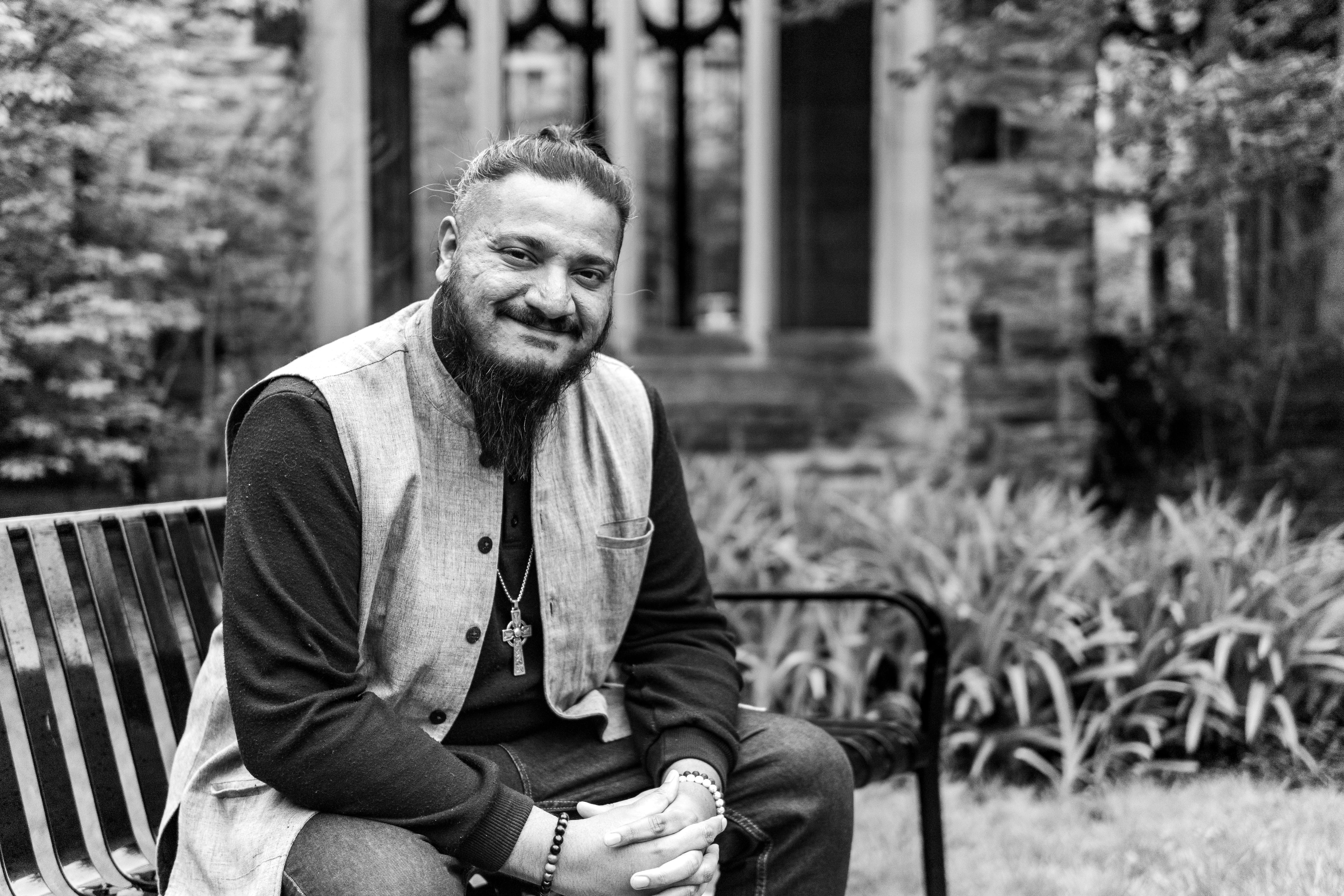
Welcome to a brand new Masala Chai Theology series - Augustine vs. Celtic Christianity. This series is inspired by some research and teaching I’m doing on Celtic Christianity at St. Stephen’s University.
I got my first Substack hit piece a few months ago.
I won’t link to my hater or his piece (which I haven’t fully read because it’s mostly behind a paywall and I won’t be paying for the pleasure of reading a goofy hit piece about myself). But here’s how he started his hit piece attacking me:
“Maybe you’ve seen this guy.
He’s popular among the Deconstructing or Deconstructing-Adjacent types.
His name is Joash Thomas, and he’s an Indian immigrant to the USA who eventually resettled in Canada. He has an interesting journey, but his entire shtick is how Western Christianity is deeply “Colonial” and needs to unlearn oppression and learn from Eastern Christianity.
This—like most things Colonialism—is pure ideology and almost always a historical farce….We are cooking up a course at <redacted, fake, unaccredited ‘Christian University’ run by this guy> entitled, “The Virtues Of Colonialism,” meant to share how European Christian exploration and commerce made every single continent an immeasurably better place, and did far less evil to the inhabitants of undiscovered lands than these same tribes did to others around them.
Colonialism—by and large—was a gift. Being conquered is not a happy story for anyone. But when you understand that these tribes were demon worshipping, murdering, child-sacrificing, animal-copulating, backward savages—like my own Celtic ancestors before the light of Christianity—you begin to re-evaluate.”
There’s a LOT going on here.
But I stopped reading as a huge realization hit me like a sack of unwashed Basmati rice:
“This person (whose last name quite fittingly rhymes with ‘Pinocchio’) doesn’t really have a problem with me. He has a problem with his own Celtic ancestors! Or in other words: he doesn’t just hate me; he hates me because he hates himself - especially his own ancestors. Besides, how is it that I know more about his Celtic Christian ancestors than he does?!”
Just like my St. Thomas Indian Christian ancestors, ancient Celtic Christians are also some of the earliest ‘heretics of Empire’ in the Global Church. Except, unlike my creedal Christian ancestors in the ancient eastern church, these were creedal Christian ‘heretics of Empire’ in the ancient western church!
Like my St. Thomas Indian Christian ancestors, Celtic Christians also trace their faith directly to the apostles - but through the tradition of St. John the Revelator – specifically through St. Irenaeus of Lyon (around AD 170) who was discipled by Polycarp of Smyrna, a disciple of St. John’s.[1]
Celtic Christian ways of understanding God and neighbour are ways shaped in an intimate understanding of the heartbeat of God – going back to the apostle St. John, the disciple who leaned on Jesus’s chest at the first Eucharistic Table; famously hearing the heartbeat of God.[2]
Additionally, like the St. Thomas Christians of Kerala who invited the wrath of the Portuguese and British empires and their Empire-shaped missionaries for resisting the dualistic, Christian Supremacist theologies of Empire, Celtic Christians (like Pelagius of Wales) also faced the wrath of the Roman Empire and its apologists (like St. Augustine of Hippo and later, St. Augustine of Canterbury) for their unique, precolonial, and mystical ways of knowing Creator God and their created world and humankind.[3]
St. Augustine of Hippo (354-430 AD) is considered a ‘Doctor of the Church’. He’s a hero today among western Christians - both Roman Catholics and Protestants / Evangelicals. He’s also the patron saint of reformed / Calvinist evangelical theobros today - especially the ones who often say, “I can’t possibly be racist. I have an African (theologian) friend.”
Pelagius of Wales (354-430 AD), on the other hand, is one of the earliest church leaders to be labeled as a ‘heretic’. At the evangelical seminary I earned two master’s degrees at (which I often jokingly refer to as ‘Empire Theological Seminary’), I was explicitly taught that Augustine was the real deal while Pelagius was “a bad dude”. I remember my Church History professor explicitly calling American evangelicals he disagreed with ‘Pelagian’ - right before he started going on rants praising “benevolent Christian slavemasters” such as Confederate General Stonewall Jackson.
This was my first-ever seminary lecture in the first-ever seminary class I took. As a Christian working at the world’s largest anti-human trafficking organization at that time, I remember being a bit disturbed by this introductory experience to seminary. Looking back, it was probably my ‘evangelical heretic origin story’.
In fact, many well-intentioned evangelicals and exvangelicals still tragically use the term ‘Pelagian’ today without really knowing anything about Pelagius or (according to many modern historians) how Pelagius has been misrepresented by Empire-shaped Christianity over the centuries.
But as someone who comes from the ancient, indigenous, precolonial St. Thomas Christian tradition in India—a faith that also grew outside the shadow of western empires —I’ve come to see a very different side to the Empire-shaped, pro-Augustinian narrative I was taught at ‘Empire Theological Seminary’; one also supported by modern church historians like Henry Chadwick.
Because as a former Georgia Republican political communications consultant who got really good at doing political spin with local, state, and national media outlets, I can tell you this for a fact: Empires always have their own narratives that ultimately trample upon the stories of those they marginalize.
Empire and Empire-shaped Christians (led by Empire’s favourite theologian, Augustine) were quick to label Pelagius as a ‘heretic’ of Empire in AD 418. But to understand Pelagius in a more historically accurate way, we have to place Pelagius in his proper socio-cultural context. And that proper context is this:
Pelagius of Wales was a Celtic Christian monk who came to work in Rome. And he wasn’t alone in resisting Augustine’s Empire-shaped theology; he was resisting Augustine in community with other Celtic Christians. And ancient Celtic ways of knowing Creator God were deeply offensive to Augustine’s Empire-shaped Christian sensibilities.
One example of this is Pelagius’ teaching that to look at the face of a newborn baby is to look at the face of God freshly born among us.[4] Because of the image of God that was so freshly visible in that newborn child.
Or in other words, according to ancient Celtic Christians, the light of God has already been stamped within us from the moment of our birth; not from the moment of praying ‘the sinner’s prayer’ (contrary to what evangelicalism has taught many of us).
Now many of us who grew up evangelical have been conditioned by Empire to hear teaching like this and get defensive with retorts such as, “If we’re born with the light of God already within us, why do we need Jesus?” This was in fact Augustine’s response too - especially since this teaching of Pelagius’ flew in the face of Augustine’s doctrine of ‘Original Sin’ (which Fr. Richard Rohr has wisely rebuked as a misdiagnosis for generational trauma in his recent book, The Tears of Things).
But this kind of reductionist thinking waters down Jesus from the King of kings to just a ticket master. And it reduces Christianity from a faith of transformation to a faith of transaction.
Because according to ancient Celtic Christians, the light of God in a newborn child gets diminished over time because of sin on earth (especially the sin the Bible speaks most to via over 2000 verses - injustice, greed, and economic exploitation).
And this is precisely Pelagius and other Celtic Christians thought we needed Jesus - to remind us of this light of God that is already within us; so that we may walk in the light - just as he is in the light.[5]
Over the next few articles in this series, I’ll be unpacking what exactly it was about Pelagius’ rich, Celtic theology that drove Augustine (and still drives his Empire-shaped evangelical successors today) nuts - enough to get him to tattle on Pelagius with the Roman Emperor - to ultimately have Pelagius declared as a ‘heretic’; especially when Pelagius started going ‘too woke’ by teaching women to read the Scriptures[6] and calling on the rich in the Roman Empire to show more responsibility towards the poor - active threats to the power structures of the Roman Empire.[7]
For those of you who want to dive into the three key ancient Celtic Christian doctrines that I believe need to be retrieved by the western church today (along with its justice implications for our world today), you’ll want to watch my recent lecture video on Celtic Christianity that one of my students very kindly described as “honestly one of the best lectures I’ve ever listened to.”
I’ve made this full, 45 minute lecture video available exclusively for my Paid Subscribers - my inner circle of chai conversation partners who generously support my ministry as a priest and public theologian.
Hope the below lecture video blesses you by stretching your imagination and making you marvel at ancient, precolonial, Empire-resisting ways of knowing Creator God that desperately need to be retrieved in our Church and world today:
Keep reading with a 7-day free trial
Subscribe to Masala Chai Theology with Father Joash to keep reading this post and get 7 days of free access to the full post archives.