

Augustine vs. Celtic Christianity - Part 2
Learning to see Jesus outside the Bible - especially in Creation!

Welcome to Masala Chai Theology with Father Joash P. Thomas: a space to spice up our spiritual journeys with ancient, Empire-resisting, and precolonial Christian ways of understanding God and neighbour - in ways that risk upsetting our Empire-shaped religious palate. This space builds on Fr. Joash’s bestselling book, The Justice of Jesus, which you can buy here for 30% off plus free shipping (US only) or wherever you get your books / audiobooks globally. Paid Subscribers are Fr. Joash’s inner circle of chai conversation partners who generously support his ministry as a priest and public theologian. If you’d like a Paid Subscription to Masala Chai Theology but are unable to afford one in this season, just reach out and we’re happy to arrange one for you until you’re able to afford this.
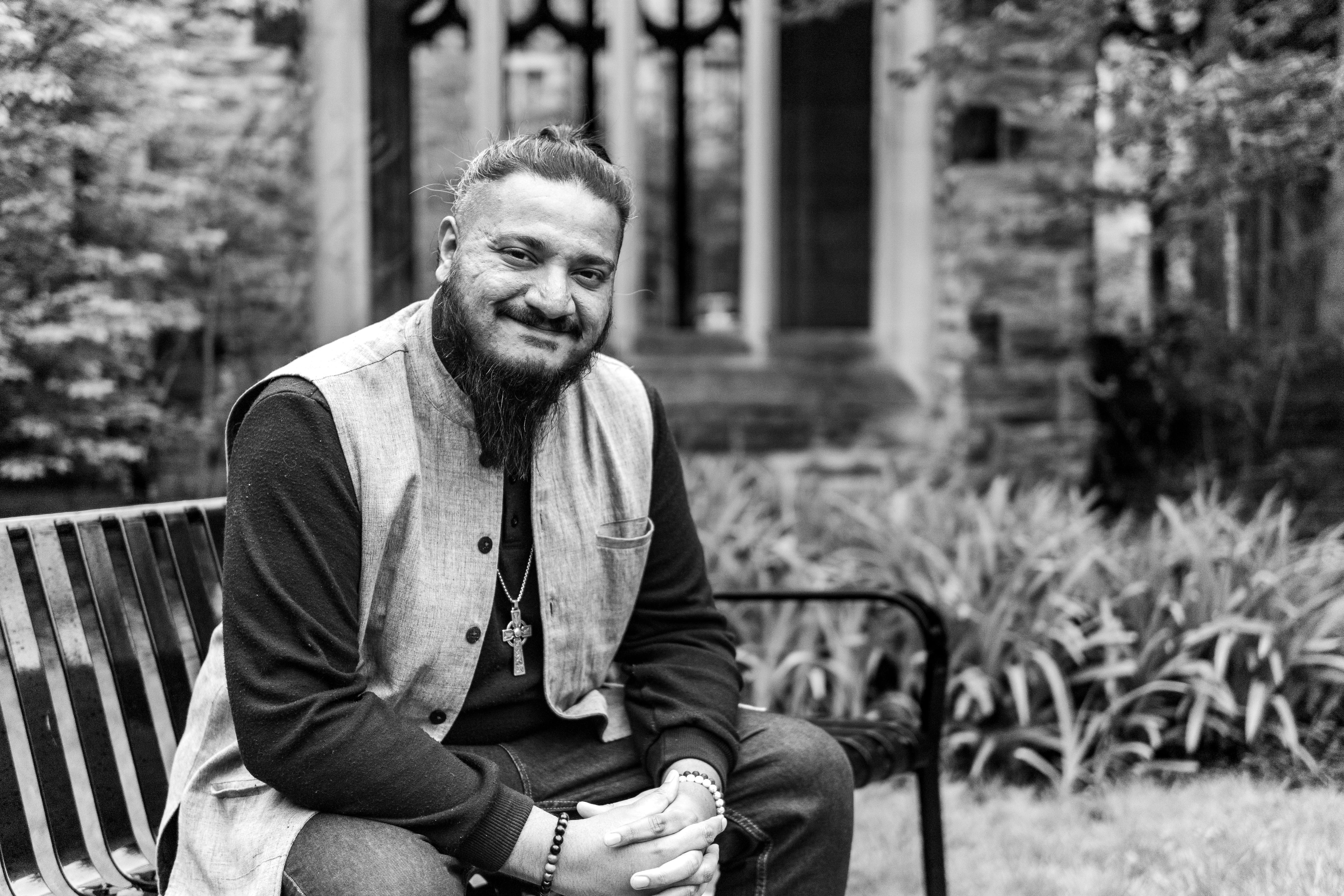
Thanks for your overwhelmingly positive feedback to Part 1 of this new Substack series - Augustine vs. Celtic Christianity.
In Part 2 of this series, I want to invite you to wrestle with one of my favourite concepts from ancient Celtic Christianity; an ancient, precolonial Christian concept that desperately needs to be retrieved for the healing of our church and world today - ‘the Big Book’.
Ancient Celtic Christians would call Scripture ‘the little book’ and Creation ‘the big book’. Maybe that’s a bit heretical to your 21st century evangelical-conditioned sensibilities so allow me to share an anecdote from my time at one of the world’s top evangelical seminaries:
Since I gave you an example of a horrendous seminary professor in Part 1 of this series, allow me to share with you some wisdom I picked up from my favourite professor at that very same seminary - my Systematic Theology 101 Professor who was tasked with teaching us ‘Theological Method and Bibliology’.
Very early in the semester, this professor (who I still fondly keep in touch with) invited our class to wrestle with a text from Proverbs 6 (NRSVUE):
6Go to the ant, you lazybones;
consider its ways and be wise.
7 Without having any chief
or officer or ruler,
8 it prepares its food in summer
and gathers its sustenance in harvest.
Then, to the astonishment of many of my evangelical classmates, this professor went on to say this:
“The Bible teaches us that sometimes, we just need to shut our Bibles and go learn from God’s good creation.”
Then, for the rest of the semester, he would often open each class with a U2 or Switchfoot song (you know, “secular music”) before expositing the lyrics of these songs to help our class find deep Christian spiritual truths in there. I know for a fact that this legendary professor has received a lot of pushback for his unconventional teaching methods at this leading evangelical seminary. But from what I can tell, to this day, this professor faithfully perseveres in teaching his students to cultivate the eyes to see Jesus outside the Bible in creation. Not coincidentally, this professor is also renowned to be a safe teacher and guide for many fellow misfits who attended this institution during or before my time (including dear friends like Zach W. Lambert).
I don’t know if this professor has any Celtic Christian ancestors but if he did, I think they’d be incredibly proud of him.
Ancient Celtic Christians would call Scripture ‘the little book’ and Creation ‘the big book’. They did this not because Scripture was unimportant; but because Scripture (as beautiful as I believe it to be) is ultimately incredibly finite compared to the vast, seemingly infinite ways Jesus reveals himself to us through ‘the big book’ - Creation.1
The sad reality is that many of us who come from the evangelical tradition were taught that we could master ‘the little book’; while being completely ill-equipped to see Christ in ‘the big book’.
I realized this harsh truth about myself after wrestling with ancient Celtic Christian theology on a silent retreat with some Jesuit friends a few months ago:
I may be a Christian priest, bestselling liberation theologian, and sought after public theologian. I’ve spent years in seminary trying to master ‘the little book’ and I’ve been teaching from it weekly for almost a decade now. But if I’m being completely honest, I’m totally clueless about what it means to see Christ in his ‘big book’.
Maybe you relate to this too.
Like me, maybe you were also taught to sing in church, “Read your Bible, pray everyday. And it will make you grow.”
Like me, maybe you too once tried to fight depression, anxiety, and addiction by reading your Bible more.
Like me, maybe you too were taught to not look outside ‘biblical wisdom’ for guidance; that every single life decision or idea you ever had needed to be justified by a Bible verse.
Empire-shaped Christianity teaches us that all truth is only found in one place - one religion, one book, one church, one denomination, etc.; and that everything else from science to the movies to rap music is ‘secular’ and removed from the grace of God.
Empire-shaped Christianity conditions us to fear what we can’t control. Perhaps this is why Empire-shaped Christians hate any kind of theology that puts no limits on the vast and limitless grace of God.
Perhaps this is also why Augustine was so fearful of ancient Celtic Christianity and the vastly expansive view of divine grace that it offered; an ancient, indigenous, precolonial theology that was highly secure in the loving presence of Christ throughout his ‘big book’ of creation. And a theology so rooted in the belief that truly nothing could separate us from God’s love in the world that he created and loved so much.2
After all, it’s easy to dominate, subjugate, and control people when you have them convinced that they’re pieces of unworthy garbage (you know, little wretched spiders in the hands of an angry God and all that) with nothing inherently good within them.
Now to be clear, as Celtic Christians like Pelagius repeatedly argued in their many letters, this by no means negates our need for Christ. I am a creedal Christian priest after all; just like Pelagius was a creedal Christian monk.
As I mentioned in Part 1 of this series, sin in the world (especially sin that the Bible speaks most to with over 2000 verses - greed, systemic injustice, and economic exploitation) dims the light of God that is already within us from the moment of our creation. So Jesus incarnates himself into his creation / ‘big book’ to awaken the light of God within us and show us how to walk in the light with God; just as he is in the light himself.3
Or as my Eastern Syriac / St. Thomas Indian Christian ancestors would put it - Jesus makes a way for us to walk in mystical union with Creator God.
If you were to ask a modern western Christian, an ancient eastern Christian, and an ancient Celtic Christian what the purpose of being a Christian is and how we get there, here are the answers I would expect us to generally get:
Modern Evangelical Christian: “The purpose of being a Christian is to make more Christians of others so that they can escape hell and go to heaven; by inviting them to pray ‘the sinner’s prayer’ and teaching them the Bible.”
Ancient Eastern Christian: “The purpose of being a Christian is to be transformed more into Christlikeness; by being mystically unified with God, by purifying my eyes to be illumined to see Christ in his creation.”
Ancient Celtic Christian: “The purpose of being a Christian is to become aware of God’s sacred presence within ourselves, humankind, and all of creation; by cultivating the eyes to see Christ all throughout ‘the big book’.”
Do you see the similarities between the latter two? And do you see how the first form of Christianity is practically its own religion that looks nothing like the latter two? I’ll let you decide which version of Christianity actually sounds like good news to the poor and the oppressed; a Jesus-shaped Christianity that is ultimately a threat to the ways of Empire.
Perhaps (according to the research of modern historians like Henry Chadwick), this is also why Augustine ultimately weaponized Pelagius’ writings on the rich’s social responsibility towards the poor to get the Roman Emperor, Honorius to brand Pelagius and his Celtic Christian colleagues as ‘heretics’.
Over the past year, I’ve made a conscious effort to cultivate the eyes to see Christ in his creation, ‘the big book’. I’d like to share three intentional practices that have helped me in this - but primarily with my Paid Subscribers (my inner community of chai conversation partners who so generously support my ministry).
As a Paid Subscriber exclusive, I’m also sharing below a recent 26 minute lecture video I recorded for a class at St. Stephen’s University (where I serve on Core Faculty) on cultivating the eyes to see Jesus outside of Christianity in other world religions. Because as a Jesus follower, I am now obsessed with trying to see Jesus in all of his creation (including all human societies, religions, and cultures)!
I hope these resources bless you in your journey of deeper spiritual wrestling:
Three Practices that have helped me cultivate the eyes to see Jesus in Creation:
Create more space for the contemplative spiritual practice of Adoration / Gazing…
Keep reading with a 7-day free trial
Subscribe to Masala Chai Theology with Father Joash to keep reading this post and get 7 days of free access to the full post archives.