

Decolonizing 'The Great Commission'
What if I told you that the 'The Great Commission' is historically, a modern, western, colonial invention to steal, kill & destroy?

Welcome to Masala Chai Theology with Father Joash P. Thomas: a space to spice up our spiritual journeys with ancient, Empire-resisting, and precolonial Christian ways of understanding God and neighbour - in ways that risk upsetting our Empire-shaped religious palate. This space builds on Fr. Joash’s bestselling book, The Justice of Jesus, which you can buy here for 30% off plus free shipping (US only) or wherever you get your books / audiobooks globally.
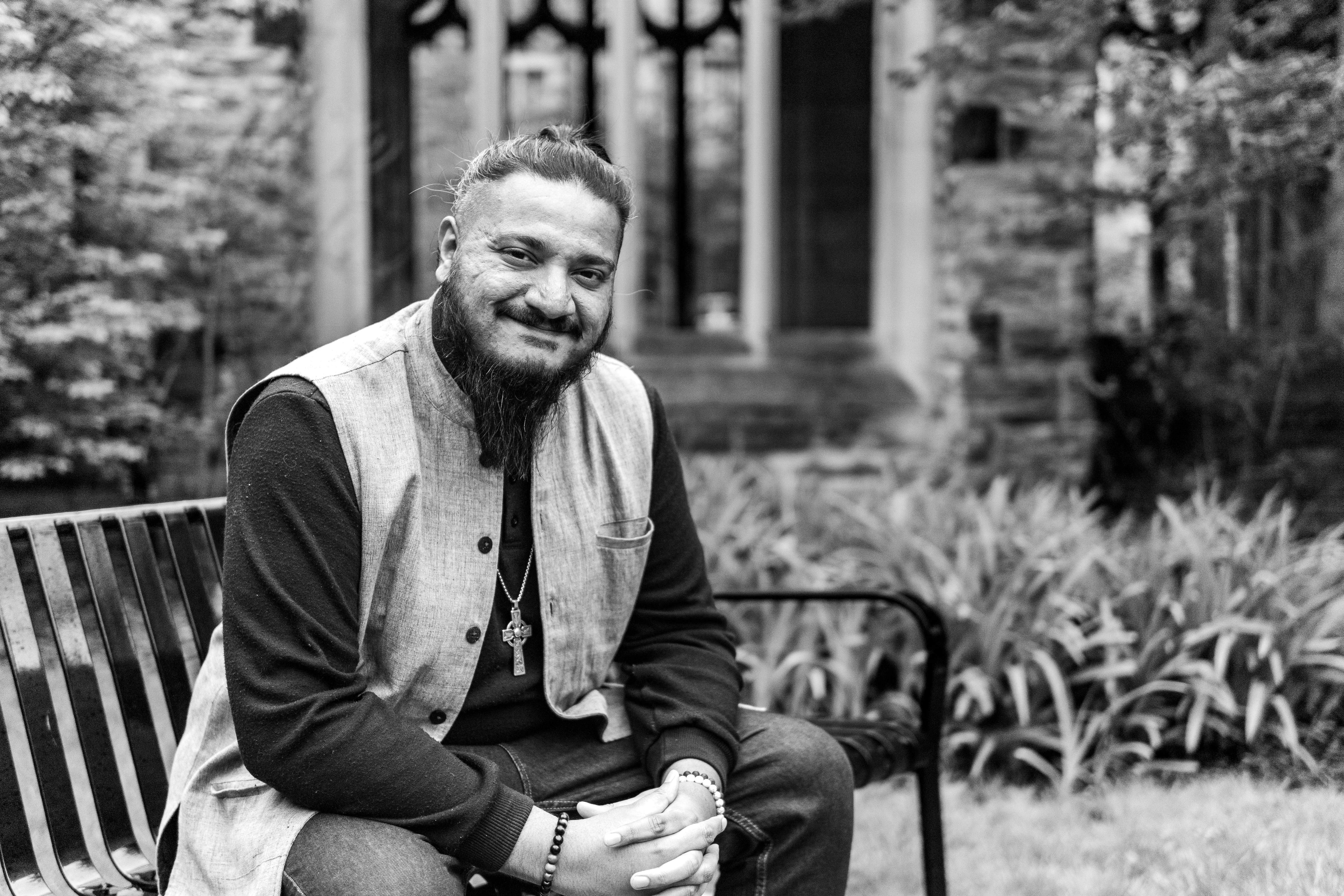
Some of you only know me as ‘Father Joash’ but I was born and raised in the Global South Evangelical Church. Before moving in a more ancient, liturgical, and sacramental direction as I got disillusioned with evangelicalism, I was deeply shaped by the Jesus I encountered in the Indian, American and Canadian evangelical contexts.
And yet, I’ve been brewing on a spicy Masala Chai Theology question for a while now. In fact, I’ve double checked, triple checked, and agonizingly wrestled over this one for many months (if not years) now - both individually and in Christian community (including with fellow clergy, historians, and theologians). And yet, I can’t unsee it now.
So indulge me as I articulate a few brutally honest thoughts and questions here and invite your honest wrestling in this. And if I can make a preemptive request: Instead of giving into the urge to cancel me or lash out at me for going here, perhaps sit in the tension of this with me:
What if I told you that ‘The Great Commission’ is actually just a colonial-era doctrinal innovation?
Even as I type these words, I can sense my own Empire-shaped evangelical defense mechanisms kick in. I find my inner evangelical child saying this to me:
Are you sure you want to go here, Joash? The Great Commission is after all, a holy grail topic for evangelicals globally. It’s a key foundational theme for evangelicalism; so much so that many of us who grew up evangelical can’t even imagine a Christian faith without ‘The Great Commission’.
You’re already “too spicy” for folks in evangelical / evangelical-adjacent spaces. Your agent told you to keep building your Substack before we start pitching your proposal for Book #2. This is quite literally the opposite of that!
Yes, and as a Christian and ordained church leader who invites the church to care deeply about justice, I feel like I have no choice but to go here.
Let me take this a step further with an open invitation: Find one place in church history where the phrase ‘The Great Commission’ was used before the era of colonialism - in any language!
The earliest use I can find of this ‘Great Commission’ language is in some (again, not all) circles in the post-reformation era - something that also historically coincides with the age of western colonialism.
From the best of my research, the doctrine of ‘The Great Commission’ did not exist in the Global Church’s vocabulary (or theology) until the age of western colonialism - for 17 centuries! So yes, it’s fair to say that ‘The Great Commission’ is a modern, colonial-era innovation.
In fact, there is an abundance of historical evidence to suggest that prior to the era of western colonialism, neither the Roman Catholic Church nor the various branches of the Orthodox Church held the teachings of Jesus in Matthew 28 to be an open question; they believed it to be a settled directive from Jesus for just his apostles (Jesus’ audience in Matthew 28); something that they all obeyed - with St. Thomas traveling the furthest among them to my ancestors in India.
Or as I shared in a recent podcast conversation:
“To assume that Jesus was speaking to us or Bob from Waco, Texas in the 21st Century west (while forgetting who Jesus was speaking to in the text of Matthew 28) is ignorant at best and narcissistic at worst. This is what we get when we reduce Jesus from saviour of the world to just a personal saviour.”
Besides, nowhere in text of Scripture itself (including in the original Greek) do you ever find the words “The Great Commission”. If you’ve seen these words in the Bible it’s because of this: these words were added as a sub-heading to the English Bible in the colonial era.
In fact, some of the first Christians to use this theological framework of ‘The Great Commission’ in the history of the Global Church were western missionaries who came and / or operated hand-in-hand with western colonial empires sent to steal the wealth and resources of Turtle Island and Global South peoples. Ex: William Carey (British missionary to India) in the late 1700’s and Hudson Taylor (British missionary to China) in the late 1800’s.1
Now yes, (fellow?) Indian uncles and aunties will quickly flag for me that in William Carey’s example, the British missionaries didn’t want William Carey evangelizing at first. But that’s it right there - at first. Eventually, the British Empire realized that missionaries could be incredibly helpful in their efforts to divide and conquer to loot (ironically stolen from the Hindi word with the same meaning “loot”) our wealth and resources.
As colonialism spread like a cancer, so did the doctrine of ‘The Great Commission’ across the western and Global South Church - a convenient way for western Christian empires to get the western church to ecumenically participate in its colonial project of stealing, killing, and destroying.
And a convenient way for western missionaries backed by Empire to invite locals to a Christianity that ultimately requires nothing of us beyond just believing in the right stuff with our heads (even if many new Christians bring the devotional zeal of their indigenous spiritualities like Bhakti Hinduism or Islam to their practice of Christianity) and telling others about it. And then glorifying the well-meaning folks being persecuted for trying to sensitively or insensitively impose their understanding of God on their Hindu, Muslim, Sikh, Jain & Buddhist neighbours.
I’m in relationship with a number of Global South evangelical leaders really wrestling with what it means to follow Jesus despite the narrow version of Christianity many of the missionaries they encountered left them with. What always ends up tripping these folks up however is the colonial framework of ‘The Great Commission’ they’ve inherited - a framework of saving souls that will always ultimately take precedence over the liberation of physical bodies in oppression.
Yale theologian, Dr. Willie James Jennings writes in The Christian Imagination that the colonial powers came with three key agents – the Merchant, the Mercenary, and the Missionary. And the Missionary provided moral legitimacy for the colonial project - both at home and abroad.
As I write in my book, The Justice of Jesus - my spice cultivating and trading St. Thomas Christian ancestors (who first learned about Jesus in AD 52 from St. Thomas the apostle) followed Jesus in uniquely ancient, ecumenical, and interfaith hospitable ways for 1500 years before the first western missionaries showed up trying to convert us to their narrow, Empire-shaped religion. And to divide and conquer us to steal our resources, they had to first divide and conquer our theological imaginations.
Ex: The Synod of Diamper in 1599 (another historical event mentioned in my book, The Justice of Jesus), where Portuguese Catholic missionaries used the might of the Portuguese Empire to burn our ancient St. Thomas Indian church documents and explicitly declare as ‘heresy’ our ancient doctrines that ran contrary to their Empire-shaped, divide and conquer, Christian Supremacist theology.
I share this larger historical context because I want us to grapple with this reality:
Western missions (even if well-intentioned) was (and in many ways, still is) ultimately a tool for western empires who manipulated these zealous western Christians to ultimately divide and conquer the imaginations of the indigenous communities they sought to colonize.
Now, did these missionaries do some good things for justice and compassion that made some difference to the communities they served? Of course! But two things can be true at the same time - this and that they were still operating within and out of colonial-era, Empire-shaped frameworks designed to kill, steal and destroy. You can watch this recent Masala Chai Theology conversation with Dr. Holly Berkley Fletcher (author of The Missionary Kids) here for a wrestling conversation on this.
A Lesson from our Homalco First Nation indigenous neighbours
Just this past weekend, I had the great honour of visiting Homalco First Nation territory in the Coastal Salish region of what we now call ‘Vancouver Island’ in a country called ‘Canada’ (a bastardized version of the Iroquoian word ‘Kanata’ meaning “village” or “settlement”).
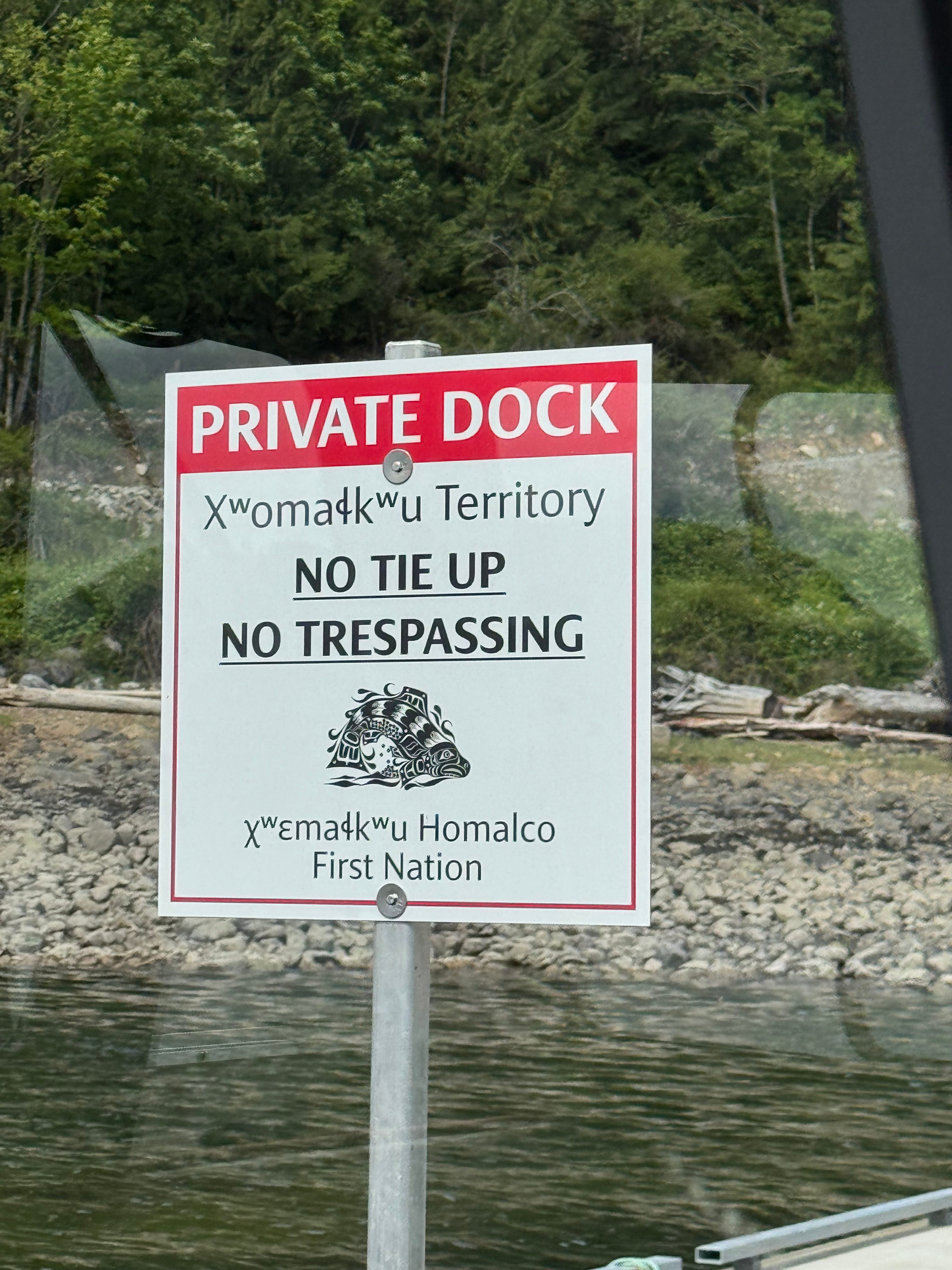
Our guide, a wise and gracious Homalco woman, shared this story of her community with us:
“When the colonizers came to our islands via ship, they gave us blankets bearing diseases that wiped our population from 150,000 to merely 10,000. Then, their missionaries took down our big house and put up a church. They forcibly forbade us from speaking our native tongue and sent our children to residential schools - the last one of which closed only a few decades ago. The British Columbia provincial government even took our fishing licenses away in the 1980’s. We are now slowly rebuilding and reclaiming what was robbed from us.”
As this woman shared her painful story (one identical to almost every indigenous community on Turtle Island and the Global South that came into contact with western empires and their missionaries), I couldn’t help but feel a sense of anger on her behalf - as a Christian priest!
What right did these missionaries have to come in, disrespect their ancient ways of knowing Creator God, and forcibly build a church no one asked for upon their land? That church building (taken down only recently) had no business being on their lands.
Also, the colonial posture of “we know better than you what is best for your own good” is one that persists in western Christianity today - even in myself at times if I’m being brutally honest and holding up a mirror.
And stories of harm caused in Jesus’ name globally like this are exactly why you can expect me to shine a light on this modern, western-origin, Empire-shaped, colonial-era theological framework that we now call ‘The Great Commission’ - a beautiful teaching of Jesus’ for a particular audience taken completely out of its original context to domesticate the Christian faith into a tool of Empire; one that reduced Christianity from transformation to transaction.
Now I want to broaden my tone here from ‘public theologian / historian’ to one that is also priestly. And I’m going to keep this next section exclusive for paid subscribers because these folks are my living room chai discussion partners who are also dear ministry partners.
I can viscerally feel many of you feeling deeply unsettled by everything you’ve read in this article. It’s likely poking a lot of holes in your neatly packaged ‘chai tea latte bags’ - which can be liberating but also slightly terrifying.
The sad reality is that many of us coming from evangelical backgrounds have been implicitly or explicitly taught that the purpose of being a Christian is to solely live out the Great Commission by verbally proclaiming Christ to other people and getting them to change their minds.
I can feel many of you thinking:
“Well, Father Joash - if the point of being a Christian isn’t the Great Commission because that’s a modern, colonial innovation, then what is it? Why even bother to be a Christian in the first place?”
Here’s why:
Keep reading with a 7-day free trial
Subscribe to Masala Chai Theology with Fr. Joash P. Thomas to keep reading this post and get 7 days of free access to the full post archives.