

Decolonizing The Great Commission - Part 3
Is there a healthy way to do Decolonized Christian Mission, Discipleship & Evangelism?

Welcome to Masala Chai Theology with Father Joash P. Thomas: a space to spice up our spiritual journeys with ancient, Empire-resisting, and precolonial Christian ways of understanding God and neighbour - in ways that risk upsetting our Empire-shaped religious palate. This space builds on Fr. Joash’s bestselling book, The Justice of Jesus, which you can buy here for 30% off plus free shipping (US only) or wherever you get your books / audiobooks globally.
Thank you, friends for wrestling with me on the colonial era theological framework we’ve inherited called ‘The Great Commission’. I’ve truly appreciated your wrestling and camaraderie in Part 1 and Part 2 of this series (and the subsequent conversations on social media). I have no doubt that this wrestling has been deeply unsettling for many of us - as it certainly was for me given my own deep evangelical roots and conditioning.
Still, one of the dangers of deconstructing and decolonizing the un-Christlike, colonial-era imaginations we have inherited is reckoning with the question that naturally emerges: “Now what?”
Should Christians still look to engage in the mission of God globally? And what does decolonized Christian discipleship (and evangelism) look like?
I’ll get to these questions towards the end of this post but I’ll also say this: I wrote about 50,000 words to answer exactly these questions in my book, The Justice of Jesus. I’d love for you to read, wrestle and (honestly) review it - not just individually but also in community; just like hundreds of churches, small groups, and book clubs around the world currently are - including several Christian ministries around the world wrestling with decolonized Christian mission.
But I wanted to start by addressing a specific question that has been surfacing for many of us:
“Father Joash - I now get that ‘The Great Commission’ verbiage was only first used during the colonial era. How are we to reframe this teaching of Jesus’ that we now call ‘The Great Commission’ in a decolonized way? Aren’t we still called to “go and make disciples”?”
I’m so glad you’re wrestling with this! Now that we’ve been liberated of at least some of the strongholds of Empire-shaped Christianity, we can finally start to return to the lost, narrow, and ancient way of Jesus-shaped Christianity.
I’d like to answer this question by starting with the legendary story of one of the first western missionaries who tried to decolonize Christian missions - Roberto De Nobili:
In 1493, Pope Alexander VI issued a Papal Bull granting the Spanish Empire exclusive rights to explore, colonize, and claim all “newly discovered lands” west and south - authorizing its Catholic Monarchs (Ferdinand and Isabella) to claim any non-Christian lands not already possessed by a Christian monarch. This was later extended to include the Portuguese Catholic Empire in 1494.
Under this system, the Portuguese Empire was given control of all Catholic missions in India. Portuguese authorities and missionaries insisted that all Indian converts adopt European dress, Portuguese surnames, and eat beef. [1, 2, 3] Many of these missionaries were outright racists who were unnecessarily offensive to local Hindu religious sensitivities - often even deliberately pursuing martyrdom.
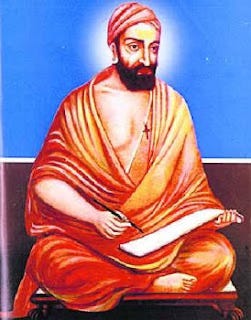
Still, one Italian-born Jesuit, Roberto De Nobili took it upon himself to translate Scripture into local languages like Sanskrit and Tamil - something that him to study local Hindu religious texts such as the Upanishads. Arriving in India in 1605, De Nobili wanted to incultarate Christianity into these southern Indian contexts via local contextualization (much like my St. Thomas Christian ancestors in Kerala already had for 15 centuries before western missionaries like De Nobili arrived on our shores). He did this by dropping the European garb and donning the saffron robes of an Indian Sannyasi (an ascetic monk). He wore wooden sandals, shaved his head (clearly, I am more Sadhu Sundar Singh than De Nobili!), and kept a traditional tuft of hair akin to the upper-caste Hindu Brahmin priests.
Now, De Nobili was by no means a model for decolonized Christian mission. Instead of taking on the oppressive caste structures of the communities he engaged with, he exclusively focused on ministering to upper caste Hindus. And even though he was far ahead of his time, some of us today might call his missional tactics agenda-driven, hyper-spiritual, and even ‘cultural appropriation’.
But over the course of his studies, De Nobili argued that the Hindu religious texts revealed sophisticated spiritualities containing a number of shared attributes with Christianity. Predictably, to the European powers who had sent him to ultimately support their colonization efforts, De Nobili’s theology and methodology looked like a jarring betrayal of their western Christian faith; even though De Nobili argued that he was doing exactly what the early western Christians had done by incorporating Greco-Roman pagan customs.
De Nobili’s fellow clergy and government superiors however sternly reminded him that as a western missionary, De Nobili wasn’t sent to “go native” (become incarnate by being a humble student like Jesus); he was sent to “convert the heathens from their pagan religions” to their western way of Christianity - even if the others hadn’t bothered to do the deep dive into Hinduism that he had. De Nobili’s efforts of interfaith learning dialogue and contextualizing Christianity was seen as a direct threat to the interests of the Portuguese Empire.
Because at the end of the day, De Nobili wasn’t really sent to make disciples of Jesus; he was sent to make disciples of the Portuguese Empire - to ultimately aid and abet the Portuguese Empire’s colonial objective of stealing Indian resources for the benefit of the motherland, Portugal.
Here’s my challenge to us: Don’t just read this story as a fascinating, historical event. Wrestle with how this could be true for western missionaries (including people you know) even today - especially in light of the most powerful Empire of today (the American Empire) and its state religion - Evangelicalism.
With this historical anecdote in mind, let’s jump into Jesus’ exact words in Matthew 28:18-20:
“All authority in heaven and on earth has been given to me. 19 Go therefore and make disciples of all nations, baptizing them in the name of the Father and of the Son and of the Holy Spirit20 and teaching them to obey everything that I have commanded you. And remember, I am with you always, to the end of the age.”
Before we break this text down phrase-by-phrase, a quick note to address an assumed premise when we approach this text: We are not Jesus’ audience in this text.
As I’ve said in Part 1 of this series, this is a conversation between Jesus and his apostles. This isn’t a conversation between Jesus and Bob from Waco, Texas. Many of us have been taught to read the Bible as if every single word in it is for us as 21st Century Christians. But to read the Bible that way is quite narcissistic. Not everything is about us! Sometimes, we are merely called to observe what is going on in the text without trying to insert ourselves in it.
In fact, I was taught by the best of evangelical teachers in my InterVarsity, Passion, and Dallas Theological Seminary days to first Observe what was going on in Scripture before jumping to Interpretation or Application (a method known as Inductive Bible Study that has both pros and cons to it; just like any other imperfect interpretative lens of Scripture).
Now yes, we’re also called to wrestle with what each text means for us today but there are ways to do this this without narcissistically assuming that we were Jesus’ primary, intended audience for this (or any) text 2000 years later.
With that context in mind, lets’ dive in!
All authority in heaven and on earth has been given to me.
This is why I argue in Part 2 of this series that contrary to our evangelical programming, there are no ‘unreached people groups’ because there are no people groups who are unreached by the love of God - especially not in the earth that Jesus has been given authority over. We deeply misinterpret Jesus’ teachings in this text when we skip out on these opening words of ‘The Great Commission’.
Jesus also says this to his apostles right after his resurrection from the dead. The one who gave up all authority to be killed mercilessly as a criminal of Empire has now done exactly what Empire forbade him to do - defeating death and living life to its fullest again. And as Philippians 2 teaches us, it is for exactly this voluntary self-emptying of power (Kenosis) that Jesus models that all authority on heaven and earth has been given to him.
This is why any vision for ‘Christian Leadership’ has to be grounded in this Kenotic way of Jesus that we see in Philippians 2. And this is exactly why I’ll be teaching a course titled ‘Kenotic & Decolonized Leadership’ at St. Stephen’s University’s newly launched MA in Transformative Leadership Program this Fall.
Go therefore
As a former evangelical megachurch pastor of mine would say, “Every time you see ‘therefore’, go look at what comes right before. In this case - the “all authority in heaven and on earth” that has already been given to Jesus.
Hence, Jesus (the one who has all authority) doesn’t send out his apostles to conquer foreign lands as religious, cultural, and political colonizers; he sends them to be humble witnesses (Acts 1:8) to his Empire-resisting resurrection of life. This is exactly why there is no place for Christian Nationalism or Church-sponsored colonialism in the Christian imagination.
Even though Jesus invites his apostles to go and make disciples, the Triune God doesn’t need these apostles to “go and make disciples to transform the world for Jesus”. Because all authority in heaven and on earth is already his. And the apostles are hence told to “go therefore” into Christ’s world with that knowledge and awareness that Christ is already all in all (Colossians 3:11).
That said, there’s still an invitation to the apostles (and indirectly also to us)…
and make disciples of all nations
Note the order of events here that Jesus commands his apostles - “Go therefore and make disciples of all nations”; not, “Go therefore to all nations and then make disciples”.
Many of us from the evangelical tradition have been implicitly and explicitly conditioned into reading this text as the latter. But this colonial-era interpretation and emphasis is starkly different from what Jesus actually says: “Go therefore”, followed by, “and make disciples of all nations”.
Methodologically, the invitation isn’t to, “go into every 21st century nation state or ethnic people group and try to convert them all” Rather, the invitation is to intentionally engage in disciple-making that is inclusive of everyone who is curious about the way of Jesus - wherever you may encounter them; the way the apostle Paul and the early church eventually (after some tough conversations on inclusion) end up doing by going to strategic trading frontiers - including St. Thomas’ journey to my ancestors in Kerala; a renowned spice supplier to the Roman Empire via naval trading routes.
So keeping this methodology in mind, contrary to progressive exvangelicals assuming the same modern, colonial era ‘Great Commission’ theological framework, what if St. Paul wasn’t a colonizer missionary hell-bent on converting everyone he came into contact with but an inclusive and invitational one who took news of Jesus to gentile communities that had historically been excluded from their ancient ways of knowing Yahweh? And what if his Gospel wasn’t a reductionist “believe in the right things about God” Gospel but an “embody good news to the poor & oppressed” one?
baptizing them in the name of the Father and of the Son and of the Holy Spirit
In my experience, people from evangelical backgrounds don’t generally pay much attention to what comes after “Go and make disciples of all nations”.
Because if we paid attention to this section, we would see that the apostles are not called to make disciples and baptize them in the name and way of, “King, President and Country” or Chris Tomlin, Billy Graham, and Benny Hinn; they’re sent to baptize them in the name and way of the Father, Son, and Holy Spirit - and especially when the way of the Triune God stands in stark contrast to the way of Empire and its Christian nationalist / MAGA / MEGA (Make Europe Great Again) missionaries.
and teaching them to obey everything that I have commanded you
Most of us from evangelical backgrounds don’t even make it to this part of ‘The Great Commission’ text because mentally, we have already been triggered to look for ‘unreached people groups’ as soon as Jesus says “Go”. We’re too busy setting off to “convert lost souls” before even bothering to hear (or obey) the rest of Jesus’ instructions.
But what if I told you (as one of my bishops recently reminded our diocesan clergy) that this part is actually the most important and relevant part of ‘The Great Commission’ text to us today who have received the good news of Jesus from the apostles? If the apostles went into all the world (as they indeed did) and made disciples in the name of the Triune God who passed down the faith to us, then this is what we’re supposed to do: Obey everything that Jesus commanded us to do.
And yet, instead of making ourselves more Christian by obeying the teachings of Jesus (including his greatest commandment of loving God and neighbour by prioritizing justice) by going to bear witness to God’s transformative work in the world, we’ve settled for the colonial era vision of, “Make more Christians of others by going uninvited into their lands with savioristic, colonizer mindsets and the explicit agenda of making them believe exactly like us.”
But this still begs the question: Should Christians engage in the work of evangelism and disciple-making at all? And what does decolonized disciple-making look like?
Since my response to this includes some content themes from my book, I’ll keep this section reserved for Paid Subscribers - my inner circle of chai conversation partners who also generously allow me to dedicate more space to create more contemplative wrestling content like this:
Keep reading with a 7-day free trial
Subscribe to Masala Chai Theology with Fr. Joash P. Thomas to keep reading this post and get 7 days of free access to the full post archives.