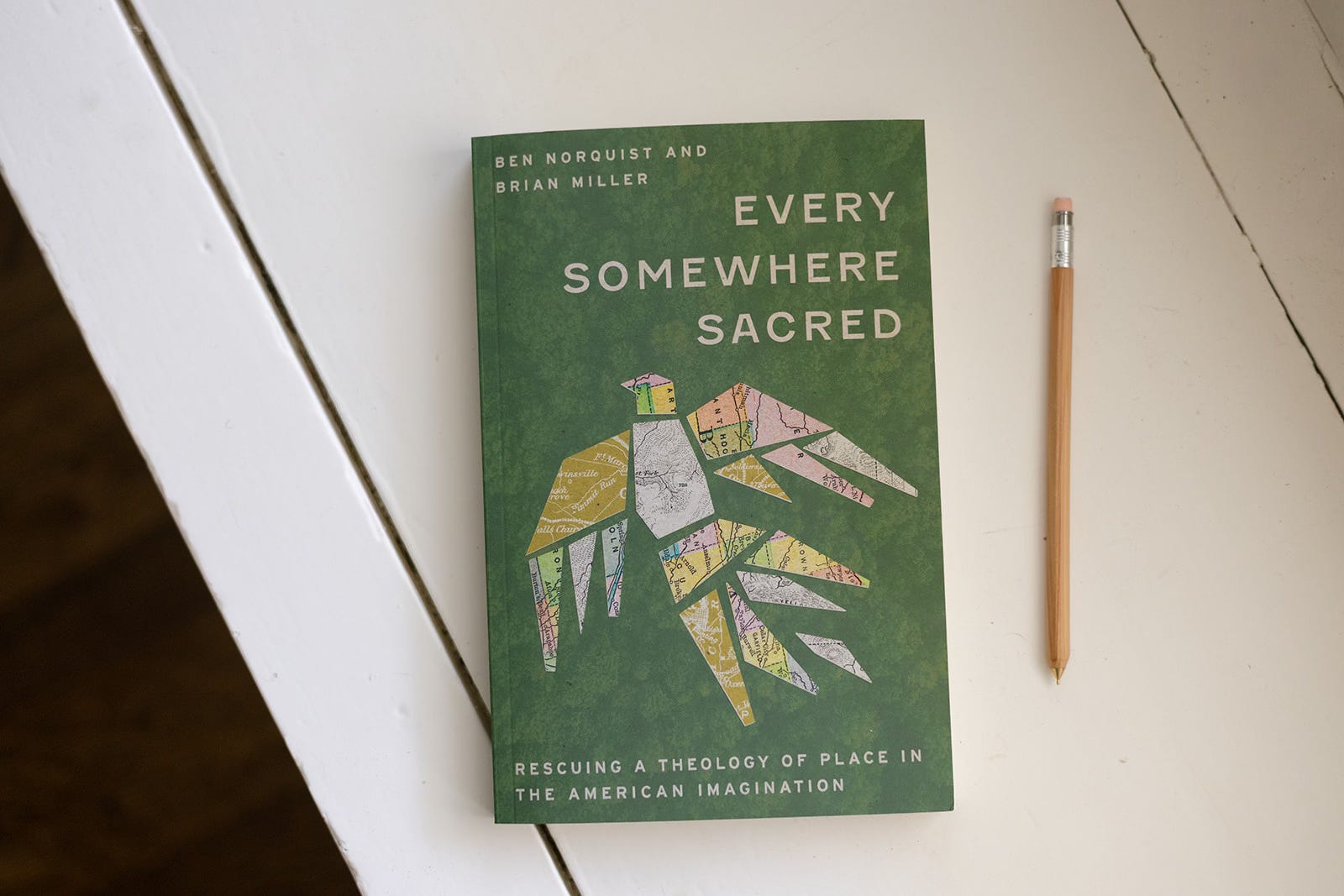
New Book Spotlight: Every Somewhere Sacred
A great resource to widen your imagination on 'Theology of Land'!

Welcome to Masala Chai Theology with Father Joash P. Thomas: a space to spice up our spiritual journeys with ancient, Empire-resisting, and precolonial Christian ways of understanding God and neighbour - in ways that risk upsetting our Empire-shaped religious palate. This space builds on Fr. Joash’s bestselling book, The Justice of Jesus, which you can buy here for 30% off plus free shipping (US only) or wherever you get your books / audiobooks globally. Paid Subscribers are Fr. Joash’s inner circle of chai conversation partners who generously support his ministry as a priest and public theologian. If you’d like a Paid Subscription to Masala Chai Theology but are unable to afford one in this season, just reach out and we’re happy to arrange one for you until you’re able to afford this.
In my sermon this past Sunday, I preached on how in order to divide and conquer our imaginations (to steal our wealth & resources), Empires first need to divide us from the Land. This is the age-old story of Empire, indigenous communities, and their land everywhere - whether it was ancient Babylonian, Egyptian & Roman empires in Scripture, to feudal empires in medieval Europe, to the American and Canadian settler colonial empires on Turtle Island, to the modern-day Israeli settler colonial empire (backed by western empires), to even the AI data centers popping up near our homes around the world today.
Many of us have come to realize this truth but very few of us have any real tools to help us widen our imaginations on what it looks like for us to be reconciled with Creator God by being reconciled with the Land.
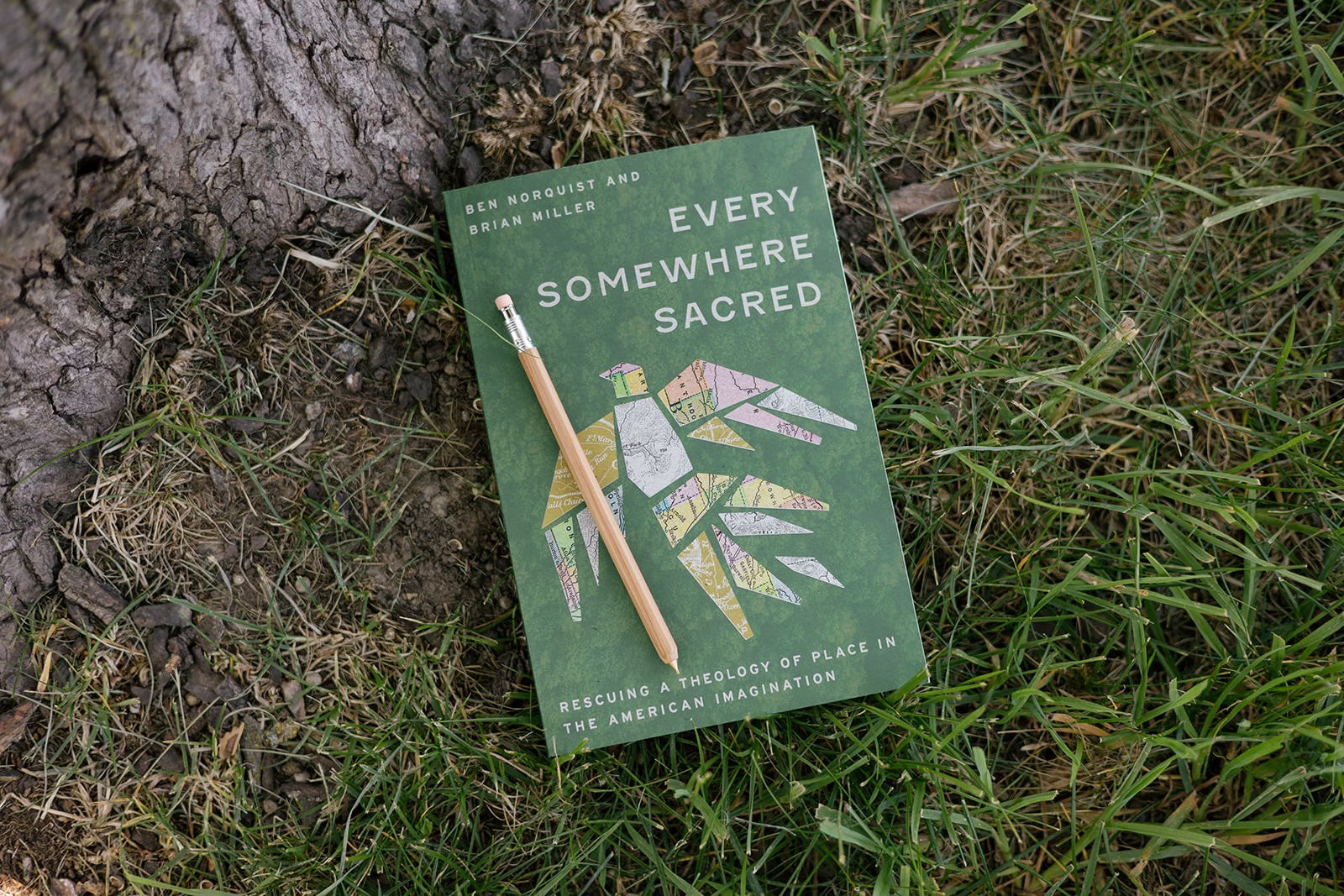
In his new book, Every Somewhere Sacred, my friend, Ben Norquist offers a wealth of wisdom in widening this imagination on being more at one with God by being more at one with the Land on the earth God that created and loves so much. Ben deeply embodies this wisdom in his own lived experience, advocacy, and work with the Palestinian Church in their own struggle for reconciliation with their Land - especially through his work at the Bethlehem Institute for Peace and Justice (BIPJ).
Ben, his co-author (Brian Miller), and their publisher (Inter-Varsity Press) were kind enough to share an excerpt from this incredible book for our Masala Chai Theology community. I hope this blesses you and encourages you to purchase your copy of this excellent book here or wherever you get your books!
Adaptation from Every Somewhere Sacred by Ben Norquist and Brian Miller
______________________________________________________________________
A Renewed Approach to Land
Imagine a place you know well. Perhaps it is home. It may be outside. It could be a place you pass through regularly or a vacation spot. You may work there, or relax there, or interact with people there, or do nothing there. You know this place. You can see it in your mind. You can feel what is around you, anticipate what you would hear, and even smell or taste this place. You know its layers and the ways you have interacted with this place.
Now that you have this place in mind, we have a question for you. What would it be like if this place were a fully realized part of God’s kingdom? It may now contain glimpses of God’s kingdom, but what would it be if it had full shalom, right relationship with God and neighbor?
What would be different? What would have changed? How would you feel in this place? What would you see, hear, smell, touch, and taste in this place? What would you point to in order to know for sure that God has fully redeemed this place?
Would this place be different because we can see at different scales? Is it clearer regarding what is going on or what the place is being used for? Are the institutions and infrastructure present working for the good of all, land, creatures, people, and all creation? Is it clear that God is in charge and is using his power to bless? Is this truly home?
Imagine that place in terms of being the home God created. He is the homemaker who put together it and all that is within it. This home was meant for all—from creatures to plants to people—to enjoy and flourish.
Or imagine that place in terms of being kin. With the land and creation, we are part of God’s family. Our well-being depends on the well-being of the others in our family. We care for each other and glorify God together.
Or imagine that place in terms of being gift. God provides land and places to people as a blessing by which they can flourish and also bless others. We are not to exploit this gift for our own purposes, hoarding wealth, status, and resources. We can welcome others to share in God’s gift.
Or imagine that place in terms of being sacrament. A holy place. Land, creation, and people existing together as a sacred sign of God’s grace and faithfulness. A visible and tangible reminder of God’s holiness.
You might resonate with one of these themes more than others. Or one of these might require more time for you to turn over in your imagination. We can often give little thought to land and place in American Christian beliefs and practices.
And consider each of these themes in light of the stories American Christians often tell about land. Instead of focusing on whether the United States is an exceptional land, or whether there is a need to close frontiers, or whether private property gives the owner the right to do whatever they want, or whether property is for wealth creation, thinking about land and place as gift, sacrament, kin, and blessing changes the focus. There are different logics at work from those employed in Western, educated, industrialized, rich, and democratic (yes, the acronym is WEIRD) settings.
Rather than exploitation and accumulation, there is bottomless generosity (Mt 20:1-16).
Instead of overused land that can barely yield anything, there is rest, celebration, and reapportionment (Lev 25).
Rather than scarcity, there is a banquet for all (Mt 22:1-14).
Instead of kings who kill and steal land for their own use (1 Kings 21), from the heavenly throne flows live-giving water (Ezek 47:1-12; Rev 22:1-2).
Gone are famine and pestilence, replaced by abundance and a tree of life that provides fruit and leaves that heal (Rev 22:2).
Rather than the steady destruction of treasure and wealth we try to hoard on earth (Mt 6:19-21), there will be enough and more for all.
Instead of banishment and exile from lands due to sin and violence (Gen 2–4), people from all over the world gather to worship (Rev 5).
It is not about getting ahead through scarce real estate; it is about working with creation to provide for many.
Rather than confusion and self-exultation (Gen 11), people understand each other and sacrifice for each other (Acts 2–4).
Forget night and darkness; God will be an everlasting light (Rev 21:23-25).
Instead of a mute creation subservient to human activity, the landscape will sing and clap before God (Is 55; These contrasts are inspired by the Bible Project podcast episode “What Kind of Treasure Is in Heaven,” June 24, 2024, https://bibleproject.com/podcast/what-kind-of-treasure-heaven).
It is less about how we created land and places and more about God’s creation, sustenance, and vision.
The places God has for people may be beyond anything we can imagine. Efforts to envision these places, whether in Pilgrim’s Progress or Paradiso or The Great Divorce or The Last Battle, work hard to put into words and images what a renewed world with all its places might be. What could any of the places we know well be when fully realized by the Creator, Cultivator, Sustainer, and Landowner?
I (Brian) think about this often in regard to places I know. What would my suburban home look like in God’s kingdom? My lawn? How about my municipality? The nearby park? The grocery store one mile away that I visit regularly? My church, in which I have worshiped for sixteen years? How can thinking of land in terms of home, gift, kin, and sacrament shake me loose from my taken-for-granted modes of moving through places?
When I consider these possibilities, I am struck by three things. First, the places I know well are far from God’s full plan for them. They are affected by sin. They face significant issues. They face demolition, degradation, and decay. They need to be maintained. Humans are exploitative, particularly in terms of turning land and nature to their selfish ends and keeping the benefits of land and place for themselves rather than seeking the good of others. Land and places become places of horror rather than home. The places that shape us and that we shape are places of lament, settings where humans have not loved God or neighbor.
Second, my understanding of places and land is almost always mediated by experiences and narratives. I may be in a particular physical setting, but what I have heard and seen often puts a layer between me and what is around me. This comes from numerous fronts: experiencing and studying the American emphasis on homeownership, with implications for what makes a home, wealth, and social status; instruction from church about an ultimate home in heaven and less concern for earth now; numerous games, from Monopoly to Risk to Settlers of Catan to SimCity to
Civilization, that treat land and property as scenery for conquest and winning; lots of reading about places, often with an emphasis on human characters and narratives rather than including all of a place; my own previous memories and social interactions in particular settings, some cherished and others haunting; various half-truths. Land stories are powerful, and Christians have the potential to tell or shift such stories toward God’s story.
Third, God’s plan for these places and lands brings me hope. The glimpses of creation in harmony may be fleeting, but they are there. The smell of pine trees, which reminds me of beautiful Rocky Mountain vistas. The waters that provide swimming refreshment on hot summer days. Well-tended gardens in bloom with food and flowers, providing respite from busy settings. Snowfalls that gleam on crisp winter days. Settings where humans are pursuing their passions and caring for all that is around them. Places where God feels close, where it is easier to see God’s work and ongoing activity.
To see and participate in these possibilities, and to not continue to propagate and carry out the American Christian myths about land and place, we could pursue
· bigger imaginations
· renewed lenses and metaphors
· open ears and eyes
· soft hearts
· wrestling with what has happened in the past and considering what could be different in the future
· approaches that can help us see what God intended for creation
· skills and tools we can develop to work through and with God’s creation rather than against it or in an authoritative role over it
· more ways to help us connect to God’s story and being through places, not just in places
· working alongside creation to realize God’s kingdom, which has already been inaugurated and will fully come to be in the future
All of us breathe, eat, sleep, and do all our life in physical places. Our mind or spirit may offer experiences beyond the physical, but they continue to be anchored to bodies and physical needs. Even the advent of the so-called virtual world, full of social media and virtual reality and generative artificial intelligence, is firmly rooted in places and land through the offline activity of users and employees, data centers, and the vast amount of resources needed to keep the whole system alive. When we follow, subscribe, and friend others on social media, we use language from the land and places where we interact with people who have all been created from dust.
We have opportunities daily to respond to God’s calling for land and places. What if at the beginning of our day we were to ask God to be part of his vision for land and places? What if we were to daily lament how land and places have been twisted and then ask for courage and faith to see how places can be renewed? What if we were to close our days with gratitude for creation?
We can do this as individuals and as collectives. Each of us can build up and love places and land. We also can do this as part of groups, families, organizations, nations, and congregations. These larger groups have access to resources and power that few individuals can match on their own. Faithfulness in our positions in these groups, whether we have a little or a lot of influence, can further God’s kingdom.
Taken from Every Somewhere Sacred by Ben Norquist and Brian Miller. ©2026 by Benjamin Eugene Norquist and Brian J. Miller. Used by permission of InterVarsity Press. www.ivpress.com.
______________________________________________________________________
Bios:
Ben Norquist (PhD, Azusa Pacific University) has served as director of grants and academics for Churches for Middle East Peace and as director of the Network of Evangelicals for the Middle East, where he helped American Christians pursue holistic peace with their neighbors around the world. Previously he also worked as a leader on the spiritual formation and community engagement team at Bryan College (Dayton, Tennessee) and with the Center for Faith and Innovation at Wheaton College (Illinois). He is a coauthor of Every Somewhere Sacred: Rescuing a Theology of Place in the American Imagination (June 2026).
Link to Ben’s website:
https://www.bennorquist.org/
Brian Miller (PhD, University of Notre Dame) is professor of sociology at Wheaton College and regularly teaches about and publishes on Christian residential and cultural patterns. His books include Sanctifying Suburbia: How the Suburbs Became the Promised Land for American Evangelicals and Building Faith: A Sociology of Religious Structures, coauthored with Robert Brenneman. He is a coauthor of Every Somewhere Sacred: Rescuing a Theology of Place in the American Imagination (June 2026).
Link to Brian’s website:
https://legallysociable.com/
Order your copy here or wherever you get your books today!